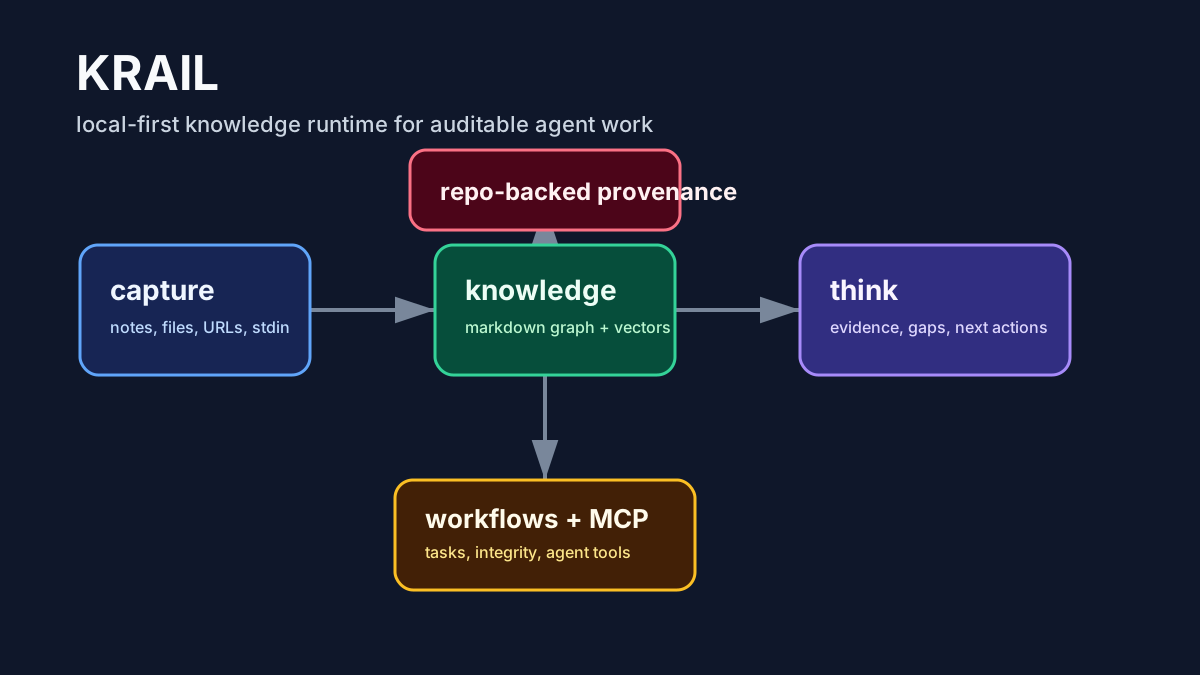
KRAIL is a local-first knowledge runtime for projects where agents need more than chat memory. It gives a repository durable context: captured notes, source pointers, knowledge packs, task records, workflow outputs, markdown graphs, vector search, and evidence-backed think envelopes. The core idea is simple: if an agent uses knowledge to make a decision, the source trail should stay inspectable.
What It Provides
KRAIL treats a project folder as a living knowledge workspace. You can capture notes or files, search raw evidence, build markdown-frontmatter graphs, ask deterministic think queries, dispatch local CLI agents as auditable workers, and expose the same functions through MCP tools for Codex, Claude Code, Cursor, Gemini, or other agent surfaces.
The project is intentionally headless. There is no required hosted database or bundled frontend. The runtime starts local, with optional API adapters and MCP tools when a project needs to connect to custom interfaces.
Core Capabilities
- Capture notes, URLs, files, and stdin into a predictable inbox
- Search local evidence with deterministic file search and SQLite vector retrieval
- Think through an answer envelope with citations, gaps, conflicts, and next actions
- Graph markdown-frontmatter entities, edges, and topic documents
- Task and workflow records for repo-backed work orders and agent sessions
- Integrity artifacts for promoted outputs and verification runs
- MCP tools for search, think, capture, tasks, workflows, and integrity
Technical Stack
- Python 3.11+
- SQLite vector storage
- Markdown and YAML project records
- CLI and SDK interfaces
- FastAPI adapter
- MCP server
- Optional DuckDB, ontology, and embedding extras
KRAIL is pilot-ready rather than polished production software. That is also what makes it interesting: it is infrastructure for making long-running AI-assisted research more durable, sourced, and reviewable.